The short answer: The right window cleaning method depends on your building, not on the contractor’s preference. Water-fed pole suits low to mid-rise glass reachable from the ground. Rope access (abseil) suits high-rise elevations with certified anchor points. A MEWP (cherry picker) suits awkward or mid-height glass where there’s safe ground access. A BMU or cradle suits tall buildings that already have one installed. Most London developments need a mix, and a good contractor will tell you which method fits each elevation, and why.
If you manage a building, you’ve probably been told at some point that your windows “need” a particular method. Sometimes that’s true. Sometimes it’s just the method that contractor happens to own.
The access method matters more than most people realise. It drives your cost, your safety exposure, how much disruption residents notice, and how often the job actually gets done properly. Choosing the wrong one, or letting a contractor choose it for you without explanation, is one of the most common reasons a window cleaning contract disappoints.
Here’s a plain-English guide to the four main methods, and how to work out which one your building needs.
Start with the building, not the method
Before comparing methods, it helps to know four things about your building:
Height and shape. How many storeys, and are there set-backs, overhangs or curved elevations?
Ground access. Is there firm, level ground beside each elevation, or is it planting, water, a busy road or a neighbour’s land?
Roof infrastructure. Are there certified anchor points or a mansafe system, or a permanently installed BMU or cradle?
Type of glass. Is it standard glazing, or are there atria, canopies, balconies or internal glass that need a different approach?
Under the Work at Height Regulations 2005, the starting point is to avoid working at height where it’s reasonably practicable. That’s why, where it can do the job, a ground-based method is usually preferred. Where it can’t, the next question is which method controls the risk best for that particular elevation.
Water-fed pole: the ground-based option
A water-fed pole system pumps purified water up a telescopic pole to a brush, so the operative cleans the glass from the ground. Because the water is purified, it dries without leaving spots or residue.
Best for: low to mid-rise buildings, typically up to around five or six storeys, depending on the pole system and the ground beside the building.
Why FMs like it: no one leaves the ground, set-up is quick, disruption is low, and it’s usually the most cost-effective option where it works.
Watch out for: it can’t reach every elevation, and it struggles with heavy set-backs or glass behind balconies. If a contractor quotes water-fed pole for a 15-storey block, ask how they’re reaching the top.
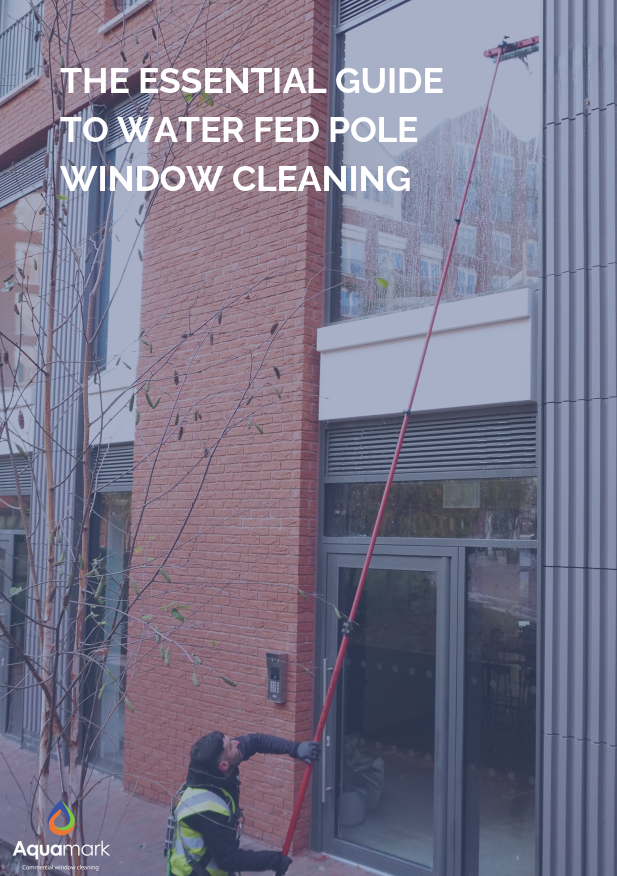
For a fuller explanation, our free Water-Fed Pole Window Cleaning Guide covers the method in more detail.
Rope access (abseil): the high-rise workhorse
Rope access technicians descend the face of the building on two independent ropes, attached to certified anchor points on the roof. On most London high-rise developments, it’s the go-to method for external glass.
Best for: tall residential and commercial buildings, especially where there’s no BMU, and elevations that can’t be reached from the ground.
Why FMs like it: it’s efficient, it needs very little ground space, and it reaches almost anywhere on the façade, including glass inside balcony and terrace areas.
Watch out for: it depends entirely on your anchors. They need to be correctly installed and inspected, typically within the last twelve months, and the contractor should check the certification before work starts. Technicians should hold recognised rope access qualifications, such as IRATA. We’ve written more about this in our post on the hidden costs of the cheapest quote and anchor compliance.
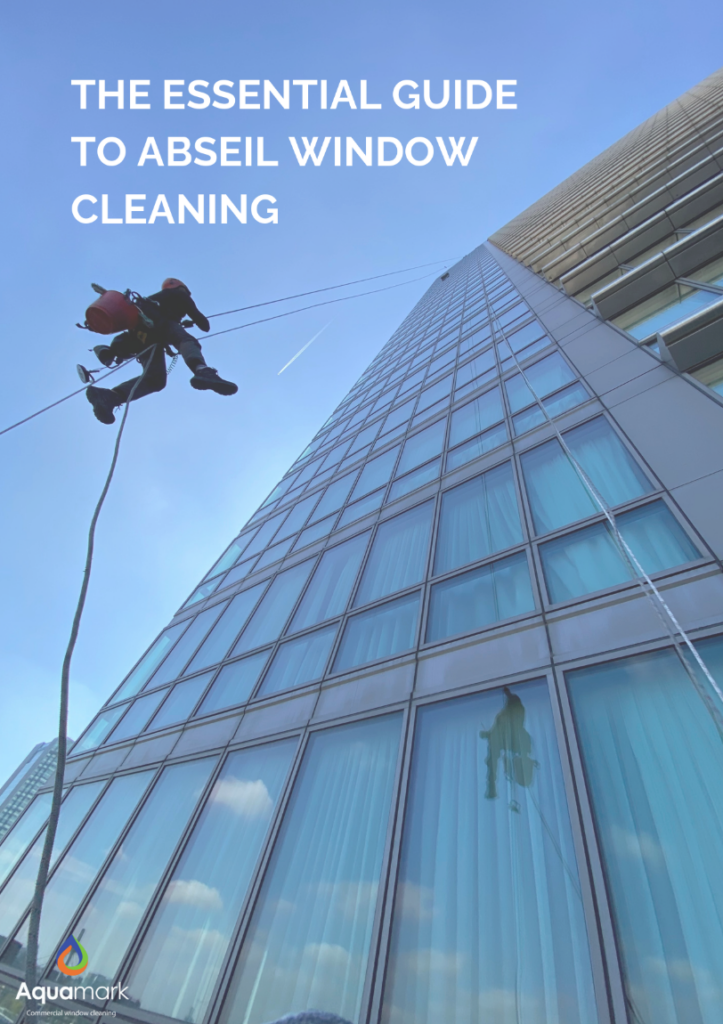
Our free Abseil Window Cleaning Guide for Property Managers goes into anchors, RAMS and what to ask your contractor.
MEWP (cherry picker): for the awkward bits
A mobile elevating work platform lifts operatives in a basket to the glass. It’s often the answer for the parts of a building nothing else reaches safely.
Best for: mid-height glass with good ground access, canopies, atria, entrance features, and elevations with no anchor points.
Why FMs like it: it’s flexible, it can reach over obstacles, and it doesn’t rely on roof infrastructure.
Watch out for: it needs firm, level ground and enough space to set up. Depending on the location, that may mean a pavement licence or road closure, which adds lead time and cost. Operators should be trained, for example through IPAF, and the machine must have a current thorough examination.

Our free Cherry Picker (MEWP) Window Cleaning Guide explains when it’s worth the extra planning.
BMU or cradle: when the building came with one
A building maintenance unit is a permanently installed cradle system, usually on the roof, designed specifically for that building’s façade.
Best for: tall buildings where a BMU was built in, particularly glass-heavy commercial towers.
Why FMs like it: it’s purpose-built for the façade, it’s stable, and it suits large, flat curtain-wall glazing.
Watch out for: the BMU is the building’s responsibility, not just the contractor’s. It needs regular servicing and a thorough examination under LOLER (usually every six months for equipment that lifts people). If it’s out of service, the window clean stops. Operatives also need specific training for that machine.

Our free BMU Window Cleaning Guide for Property Managers covers ownership, maintenance and handover in more detail.
Most buildings need a mix
In practice, very few London developments are cleaned with one method. A typical residential scheme might use rope access for the tower, water-fed pole for the podium and lower levels, and a MEWP for the entrance canopy.
That’s why it’s worth setting out the method for each elevation in your window cleaning specification. It stops contractors pricing on assumptions, and it’s the single biggest factor in an honest budget comparison.
Questions to ask any contractor
Which method are you proposing for each elevation, and why?
What did you see on the site survey that led you to that choice?
Have you checked the anchor or BMU certification, and when does it expire?
What training do your operatives hold for each method?
What happens if one method becomes unavailable, for example if the BMU fails inspection?
A contractor who answers these clearly is showing you how they’ll run your contract. One who can’t is telling you something too.
If you’re not sure which method suits your building, tell us about your building and we’ll talk it through, with no obligation.
Frequently asked questions
What is the safest method of window cleaning for high-rise buildings?
There’s no single safest method. Safety depends on matching the method to the building and managing it properly. For high-rise glass, rope access on certified anchors or a properly maintained BMU are the usual options, both delivered by trained operatives under a job-specific RAMS.
How high can a water-fed pole reach?
Water-fed poles typically reach low to mid-rise glass, roughly five to six storeys, depending on the system and ground conditions. Above that, rope access, a MEWP or a BMU is usually needed.
Is rope access window cleaning safe?
Yes, when it’s done properly. Technicians work on two independent ropes attached to certified, inspected anchor points, hold recognised qualifications such as IRATA, and follow a job-specific RAMS.
When would I need a cherry picker for window cleaning?
A cherry picker (MEWP) is useful for mid-height glass, canopies, atria and elevations without anchor points, as long as there’s firm, level ground to set up on. Some locations need a pavement licence or road closure first.
Who is responsible for maintaining a BMU?
The building owner or managing agent is usually responsible for the BMU’s servicing and its thorough examinations under LOLER, typically every six months. The window cleaning contractor should check it’s in date before using it.
